
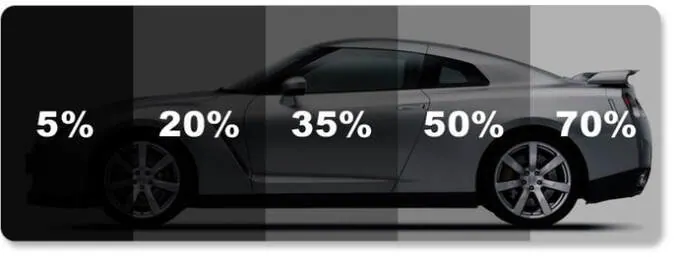
1) What do Window Tint Percentages Mean?
2) Is 20% or 35% Window Tint Darker?
3) Comparing 20% Tint vs 35% Tint on Cars?
4) Different Types of Window Tint Available for Cars?
5) Window Tint Laws: Is 20% or 35% Legal in Your State?
6) UPPF Manta Window Film: Modern Solution
7) Final Thoughts
8) Common FAQs on 20% vs 35% Window Tint
Window tint percentages refer to Visible Light Transmission (VLT), which is the amount of light that passes through your windows. The lower the percentage, the darker the tint. For example, 20% tint allows only 20% of visible light through, making it much darker, while 35% tint allows 35% of light, creating a lighter but still noticeable shade. Understanding these numbers helps drivers choose the right types of car tint for style, comfort, and compliance with local laws.
The simple answer is that 20% window tint is darker than 35%. A car with 20% tint has a sleek, bold appearance with strong privacy but reduced visibility at night. On the other hand, 35% tint provides moderate shading that balances aesthetics and clarity, making it easier for night driving while still reducing glare and UV exposure.
Here’s a side-by-side look at the differences:
- 20% Tint: Very dark, strong privacy, reduced visibility at night, bold style.
- 35% Tint: Noticeable but lighter shade, more visibility, moderate privacy, factory-like style.
Both options provide heat and UV protection depending on the film quality, but their appearance and legal status differ across states.
When choosing between 20% and 35%, it’s important to understand the different types of window tint:
1. Dyed Window Tint, Affordable but may fade over time.
2. Metallic Window Tint, Good for heat rejection but may interfere with electronics.
3. Carbon Window Tint, Strong UV protection, matte finish, long-lasting.
4. Ceramic Window Tint, Premium option with superior heat rejection, clarity, and durability.
These options let drivers decide based on budget, performance, and look. Explore our full guide on each window tint options.
Laws for window tint vary by state. In many regions, 35% tint is legal for front windows because it preserves visibility. 20% tint, however, is often restricted to rear passenger windows. Before deciding how much to tint car windows, always check state-specific regulations to avoid fines or removal requirements.
Today’s drivers want tint that balances appearance, comfort, and compliance. The Manta Window Film collection provides options for different needs and regulations, engineered with the same PLATICOAT™ coating technique used in our regular PPF:
- Manta 30: 30% tint for strong privacy and UV defense.
- Manta 50: 50% tint for a versatile balance of coverage and clarity.
- Manta 70: 70% tint for a clean, nearly transparent look with protection.
By offering multiple levels, Manta Window Film helps drivers choose the right option without compromising on quality.
So, is 20% or 35% tint darker? Clearly, 20% tint provides a deeper, more private look, while 35% offers balanced shading and better visibility. The right choice depends on your driving habits, local laws, and desired style. With the right film, you’ll enjoy comfort, UV protection, and a look that matches your car perfectly.
FAQs on 20% vs 35% Window Tint
Is 20% or 35% tint better for night driving?
35% tint is usually better for night driving because it allows more light into the cabin. 20% tint looks darker and stylish but can reduce visibility in low-light conditions.
Does 20% or 35% tint block more heat?
Heat rejection depends more on the film quality than the percentage. A high-quality ceramic 35% tint can block more heat than a cheap 20% dyed film.
Is 20% tint legal in my state?
Tint laws vary by state. In many areas, 20% tint is only legal on rear windows, while 35% is more often allowed on front windows. Always check your local regulations.
How much does it cost to tint car windows?
Costs range from about $100 for dyed film up to $500 or more for premium ceramic film. The final price depends on the film type, vehicle size, and installer.
What are the different types of window tint?
The main types are dyed, metallic, carbon, and ceramic. Each offers different levels of durability, UV protection, heat rejection, and cost. Ceramic film is considered the premium choice.